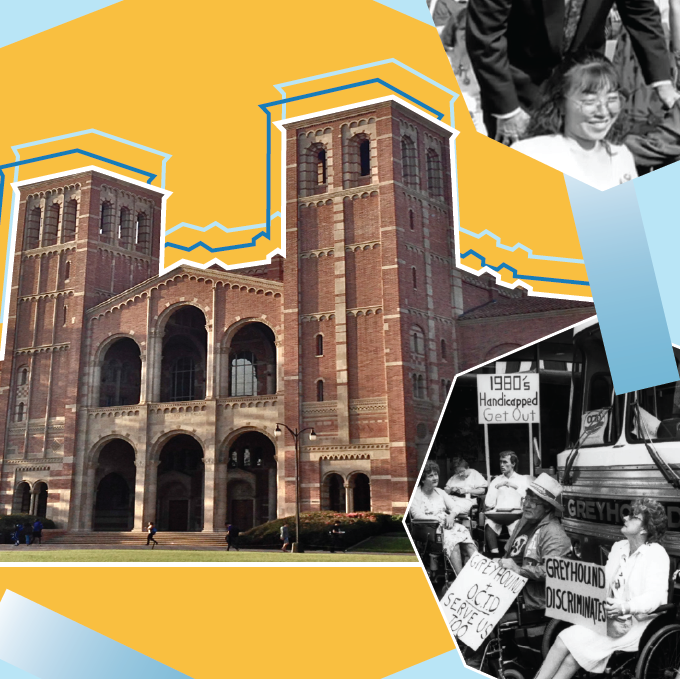
“Chasms in Care,” the focus of Dr. Lauren Clark and Keris Jän Myrick’s 2023–24 Heumann Community Partnership Lab, continues to be a salient issue for the disability community. Building on their work, the documentary LIFE AFTER brought Dr. Clark and Myrick together once more to collaborate and engage the UCLA community in examining another facet of care. On February 23, 2026, community members gathered for a screening of LIFE AFTER, followed by a discussion with director Reid Davenport. The screening invited attendees to reflect on pressing questions at the intersection of disability justice and healthcare: What does choice mean when access to care is limited? And how do systemic inequities shape decisions about assisted dying?
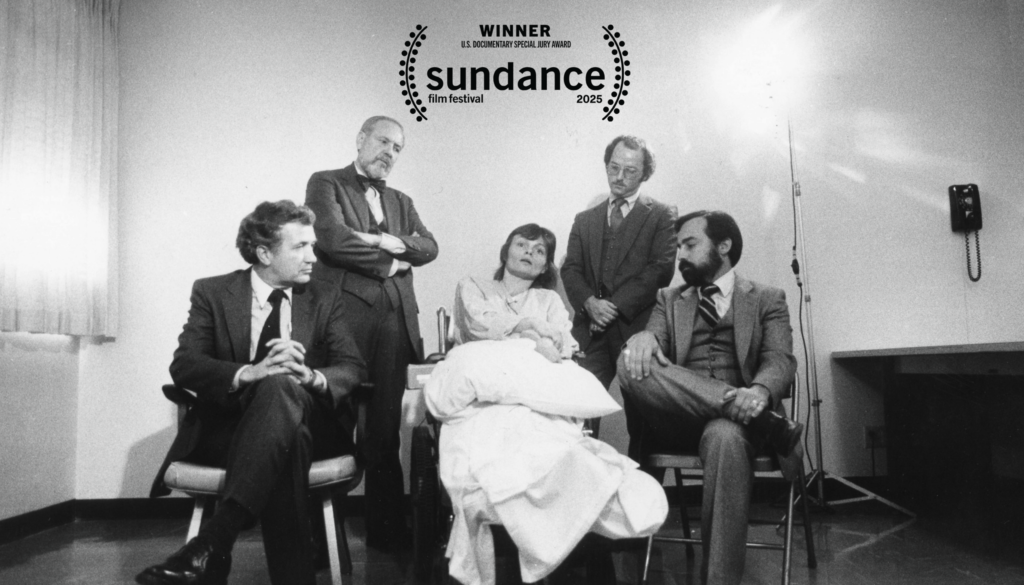
LIFE AFTER is an investigative documentary that examines the moral dilemmas and economic motives surrounding medically assisted dying while amplifying the voices of disability justice advocates fighting for dignity, equity, and access to care. Through the stories of several individuals from Canada and the United States, director Reid Davenport challenges the assumption that assisted dying always represents a freely made choice for individuals with disabilities. By uplifting individual experiences, the film highlights how systemic failures that limit access to care can make assisted dying appear to be the only viable option.
Following the screening, Dr. Clark and Myrick spoke with Davenport about the themes explored in the film. Their conversation focused particularly on the intersections of racism, sexism, and ableism in healthcare. Davenport explained that the more marginalized identities an individual occupies, the more marginalized in society they become and stressed the importance of moving beyond the medical model of disability and toward the social model. Most notably, Davenport emphasized that the social model recognizes that the majority of people with disabilities do not want to be “cured” or rehabilitated.
The film highlighted the story of Michal, a motorized wheelchair user, who shared his experience with having his home care hours reduced and losing his primary caregiver. These challenges led him to consider medically assisted dying in Canada. Although Michal was employed, his income was not enough to cover the lifelong costs of care to maintain his independent lifestyle. Davenport noted that the structure of many state-supported programs can create difficult trade-offs such as individuals losing access to essential healthcare benefits if they pursue employment or earning above certain thresholds. Eliminating income thresholds for disabled people, he emphasized, is crucial to building an accessible society.
LIFE AFTER also drew attention to the historical roots of assisted dying debates. Davenport argues that many old ideas of eugenics have been repackaged in contemporary debates. He explained that eugenic principles have become embedded in our cultural fabric and are often accepted as common sense. These concerns are further complicated by the economic realities of healthcare systems and government funding, as countries with assisted dying programs may reduce healthcare costs by billions of dollars.
When asked how the documentary might deepen health professionals’ understanding of care and suffering, Reid reflected on how “suffering” is often intertwined with the concept of “quality of life,” both medical terms that are projected onto people with disabilities. Turning to the idea of care, Reid emphasized that disability is part of the human condition. He also recalled the Disability Rights Movement of the 1970s, which centered the value of interdependence. In contrast, Reid noted that Western individualism has emphasized independence to such an extent that it has limited our collective ability to care for one another.
Attendees expressed appreciation for the opportunity to engage with the film and participate in a thoughtful conversation about disability justice and healthcare access. During the Q&A, participants asked about organizations working to address these issues and advocate for disability rights. Davenport highlighted Not Dead Yet, a grassroots disability rights organization that opposes the legalization of assisted suicide. Above all, Davenport stressed the need to give people with disabilities the agency to achieve what they want.
Visit the LIFE AFTER website to access resources such as a mental health viewing guide or discussion guide.

Image of Keris Jän Myrick and Lauren Clark with representatives from Disability Rights California.

Keris Jän Myrick and Lauren Clark speak with Reid Davenport via Zoom.